
 English
  Español
  Français
Kingway
Kingway
Kingway
Kingway
Kingway
Kingway
Kingway
Kingway
Kingway
Kingway
Kingway
Kingway
Kingway
Kingway
Kingway
Kingway
How Much Stretch Film Do You Really Need for Pallet Wrapping?
2026-07-17
Why Pallet Wrap Quantity Is Rarely Calculated Correctly
Most warehouses estimate their stretch film usage by habit rather than by calculation. A pallet gets wrapped until it "looks secure," and the roll is replaced when it runs out. This approach works until freight costs rise, load failures increase, or a sustainability audit asks why film consumption per pallet varies by 40 percent between shifts. Getting the quantity right is not about guessing thickness or wrap count. It depends on a handful of measurable variables: pallet dimensions, film gauge, pre-stretch percentage, number of wraps, and load weight distribution.
This article breaks down the calculation logic so operations teams can move from rough estimates to a defensible number, whether they are ordering hand rolls for a small facility or specifying machine-grade film for a high-throughput line.
The Core Variables That Determine Film Consumption
Before any calculation, five inputs need to be known. Skipping any one of them turns the estimate into a guess.
- Pallet footprint - standard dimensions are typically 1000 x 1200 mm or 48 x 40 inches, but irregular loads change the wrap path length.
- Load height - taller loads require more revolutions of the roll to achieve full vertical coverage.
- Film gauge (thickness) - measured in microns or gauge, this affects both puncture resistance and how far a roll stretches before breaking.
- Pre-stretch ratio - the percentage a film is mechanically elongated before it touches the load, which directly multiplies the effective yield of a roll.
- Number of wraps at base, body, and top - most loads need reinforced wraps at the bottom third to prevent shifting during transit.
Once these are known, film usage can be approximated using roll yield data supplied by the manufacturer, which is typically expressed as square meters or square feet per roll at a given pre-stretch level.
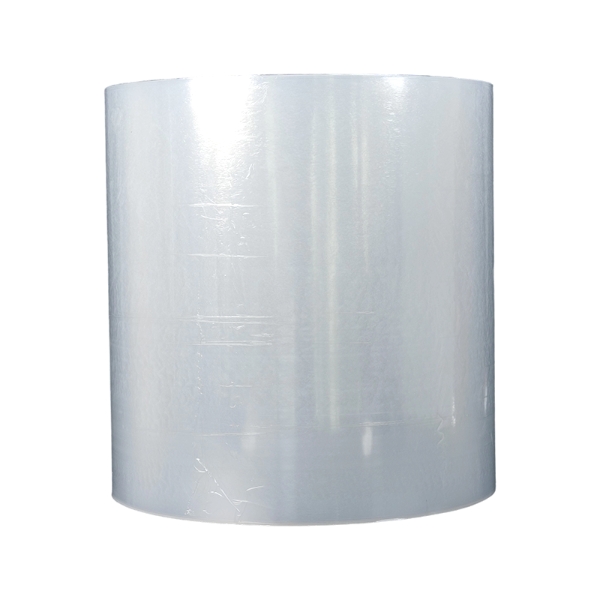
Hand Wrap vs Machine Wrap: Different Math, Different Waste
The method of application changes the calculation significantly. Hand stretch film is applied manually with a dispenser, and pre-stretch is limited by operator strength and technique, usually landing between 15 and 25 percent. Machine stretch film used in automatic or semi-automatic wrappers can be pre-stretched to 150 to 300 percent depending on the equipment, which means far less raw film is needed to cover the same load.
| Factor | Hand Application | Machine Application |
|---|---|---|
| Typical pre-stretch | 15% to 25% | 150% to 300% |
| Rolls needed per 100 pallets | Higher, variable by operator | Lower, consistent |
| Consistency across loads | Depends on operator fatigue | Fixed by machine settings |
| Best suited for | Low-volume, irregular loads | High-volume, standardized pallets |
A facility wrapping fewer than 50 pallets per day often finds hand wrap more economical when labor is factored in. Above that threshold, the reduced film consumption and consistent containment force of machine-applied packaging stretch film usually offsets the equipment cost within a reasonable payback period.
A Practical Way to Estimate Film Length Per Pallet
Rather than relying on abstract formulas, most packaging engineers work backward from three known figures: the perimeter of the pallet, the number of wrap revolutions, and the load height coverage needed.
Step-by-Step Estimation Logic
- Measure the pallet perimeter (length plus width, doubled).
- Decide the number of revolutions needed to cover the full load height, factoring in overlap of roughly 50 percent between each pass.
- Multiply perimeter by revolutions to get total wrap length required.
- Divide that figure by the pre-stretch-adjusted yield of the roll to determine how many rolls are consumed per pallet.
For example, a pallet with a two meter perimeter wrapped in 18 revolutions requires roughly 36 meters of film contact length before accounting for pre-stretch. At a 250 percent pre-stretch setting, the actual raw film drawn from the roll drops substantially compared to an unstretched application, which is why pre-stretch capability is one of the biggest cost levers in film selection.
Visualizing Wrap Coverage Across a Pallet
The diagram below illustrates how wrap revolutions distribute across a typical pallet load, with reinforced passes at the base.
Choosing the Right Gauge Without Overusing Film
A thicker plastic stretch film is not automatically better. Increasing gauge adds material cost and weight without necessarily improving containment force if the pre-stretch and wrap pattern are already optimized. Many facilities that switch from a heavier gauge to a properly pre-stretched thinner film see equal or improved load stability while reducing total film weight used per pallet.
| Load Type | Typical Gauge Range | Wrap Emphasis |
|---|---|---|
| Light, stable cartons | Lower gauge, high pre-stretch | Uniform body wraps |
| Heavy, rigid materials | Mid to high gauge | Reinforced base and top |
| Sharp-edged or irregular loads | Higher gauge or reinforced film | Extra passes at contact points |
| Long-haul or export shipments | Mid gauge with UV or moisture resistance | Full body plus top sheet |
Working with a knowledgeable stretch film supplier for packaging to test gauge and pre-stretch combinations against actual load types typically yields more savings than defaulting to a thicker roll out of caution.
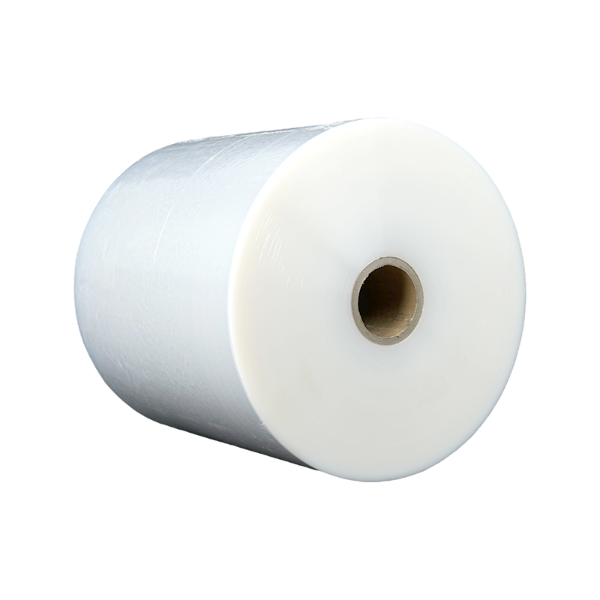
Why Film Composition Affects Yield
LLDPE stretch wrap film is the dominant material in this category because linear low-density polyethylene offers a favorable balance of elongation, puncture resistance, and cling. Films with better molecular consistency stretch more predictably, which means less film breakage during high pre-stretch application and fewer wasted partial rolls. Inconsistent film, by contrast, tends to snap under tension, forcing operators to re-wrap sections and consume more material than the calculation predicted.
When comparing rolls from different sources, checking the actual pre-stretch ceiling before failure is more useful than comparing listed gauge alone, since two films of identical thickness can have very different real-world yield.
How Automatic Wrapping Systems Change the Math
Automatic stretch film systems, including turntable and rotary arm wrappers, apply film at consistent tension and speed, removing operator variability entirely. This consistency means the film usage calculation becomes far more predictable across thousands of pallets, which is valuable for procurement forecasting.
Key adjustments available on most automated systems include:
- Programmable wrap force by zone, allowing lighter tension on the load body and higher tension at the base.
- Top sheet or netting options that reduce the number of full-height revolutions needed.
- Photo-eye load sensing that adjusts film delivery to actual load height rather than a fixed cycle.
Facilities running high pallet volumes typically find that industrial stretch film paired with automated tension control produces the most predictable cost-per-pallet figure, since both the material and the application process are standardized.
Quick Reference Checklist Before Ordering Film
- Confirm pallet footprint and average load height across your product range.
- Test pre-stretch ceiling of candidate films before committing to bulk orders.
- Separate reinforced base wraps from standard body wraps in your revolution count.
- Match gauge to load rigidity rather than defaulting to the thickest available option.
- Track actual rolls consumed per shift against the calculated estimate monthly.
Frequently Asked Questions
Q1: How many wraps does a standard pallet need?
Most stable pallets need three to five revolutions at the base for reinforcement, followed by a spiral pattern up and down the load body, often totaling 15 to 20 revolutions depending on load height and stability requirements.
Q2: Does a higher pre-stretch percentage weaken the film?
Pre-stretching beyond a film's optimal range can reduce puncture resistance, but within the manufacturer's recommended range it typically increases yield and containment force without sacrificing durability.
Q3: Is thicker film always more cost-effective?
Not necessarily. A thinner film with a higher achievable pre-stretch can often match or exceed the containment performance of a thicker film while using less total material by weight.
Q4: How often should film consumption be reviewed?
Reviewing actual rolls used against calculated estimates on a monthly basis helps catch equipment drift, operator inconsistency, or changes in load types before costs increase significantly.
Q5: What is the difference between hand and machine grade film for the same pallet?
Hand grade film is formulated for manual tension and lower pre-stretch, while machine grade film is engineered to withstand the higher mechanical pre-stretch and consistent tension applied by wrapping equipment.
-
How Stretch Films Are Revolutionizing Packaging?
Introduction In recent years, the global packaging industry has witnessed remarkable transformations... -
How to Choose the Right Stretch Wrap Film for Industrial Packaging Needs
Selecting the optimal stretch wrap film is a critical decision in industrial packaging. The right ch... -
How to Choose the Right Packaging Tape for Your Business?
Introduction: A Small Tape with a Big Responsibility In the worlds of logistics, warehousing, and da... -
The Ultimate Guide to Waterproof Duct Tape
What is Waterproof Duct Tape? In modern life and industrial applications, Waterproof Duct Tape is no...
Message Us Right Now!
- Products
- Stretch Film
- BOPP Packing Tape
- Masking Tape
- Duct Tape
- PVC Tape
- Kraft Tape
- Double Side Tape
- Stationery Tape
- Crystal Clear Tape & Super Clear Tape
- NO NOISE Tape & Low Noise Tape
- Other Packaging Products
- Telephone
- +86-527-86881066
- +86-15925605882
- [email protected]
- Address
- NO.6 Hangzhouxi, Sihong Economic Development Zone, Sihong, Suqian 223900, Jiangsu, China


Copyright © Jiangsu Kingway Packaging Technology Co., Ltd.
Zhejiang Kingway Packaging Products Co., Ltd.
All rights reserved.
Wholesale Packaging Material Factory

